The Abbe Number
Forced-perspective projection mapping
Ernst-Abbe-Hochhaus (Building 36), Jena
Tangente digital art, Jenoptik, 17–31 October 2025
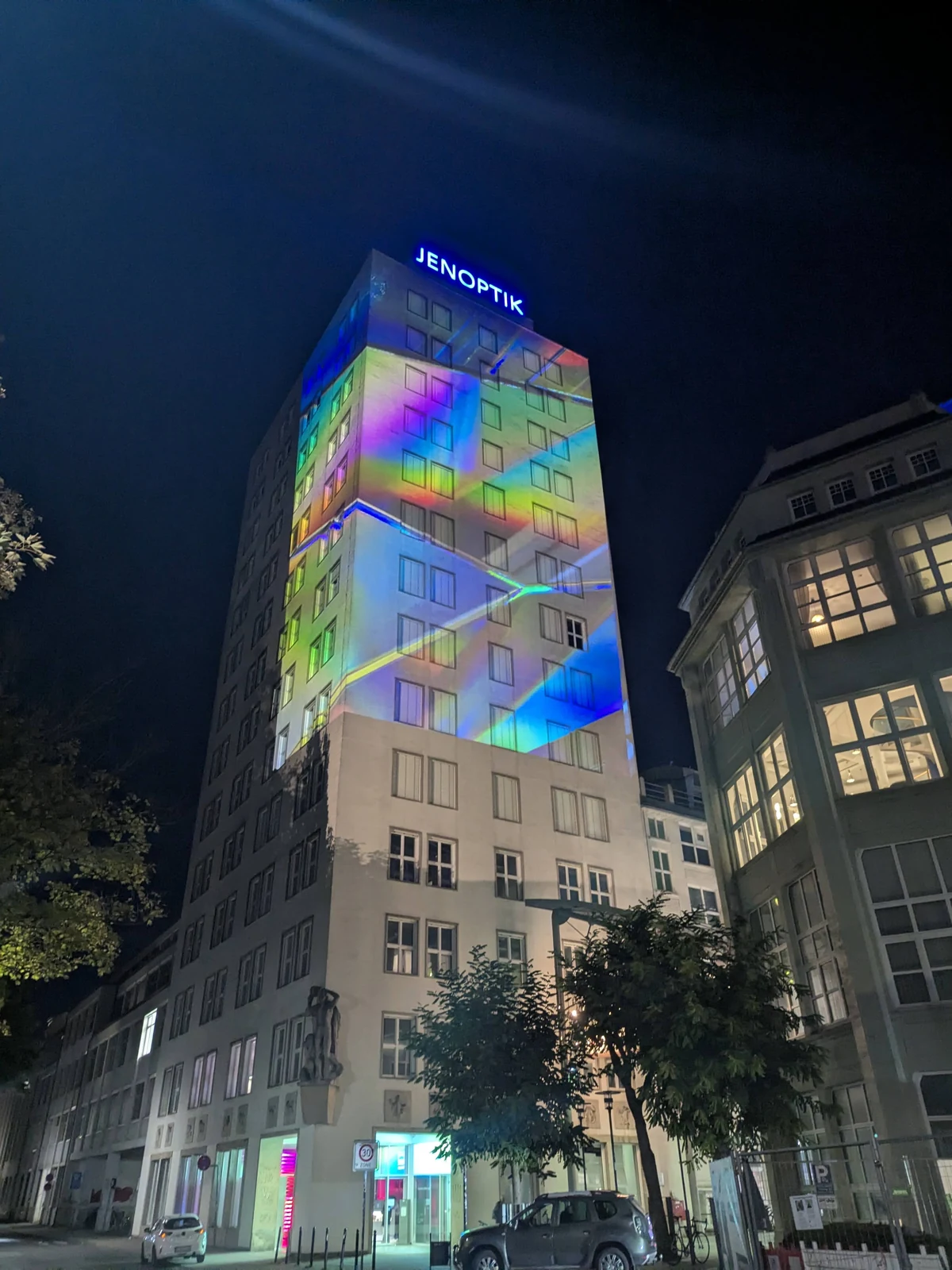
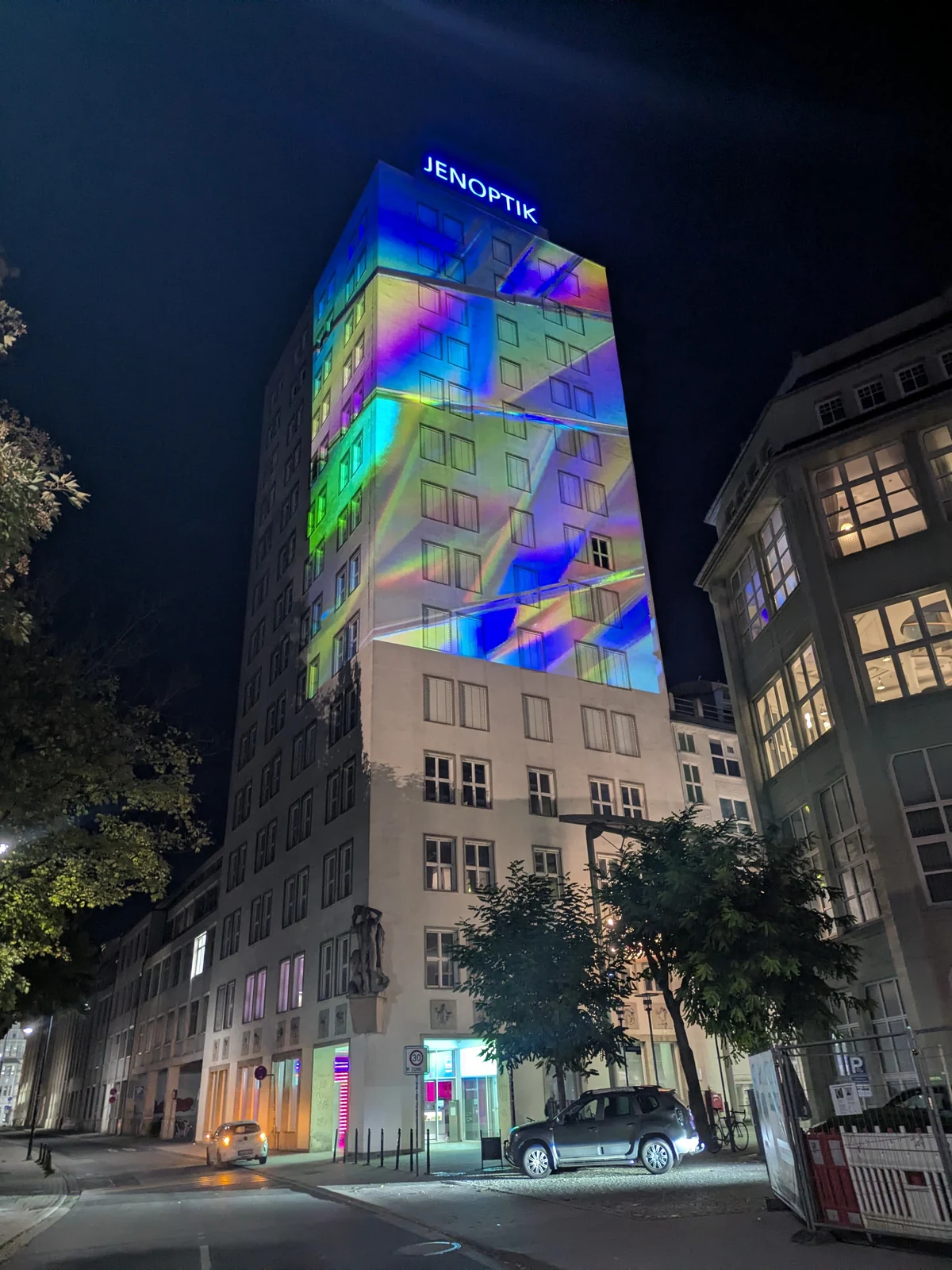
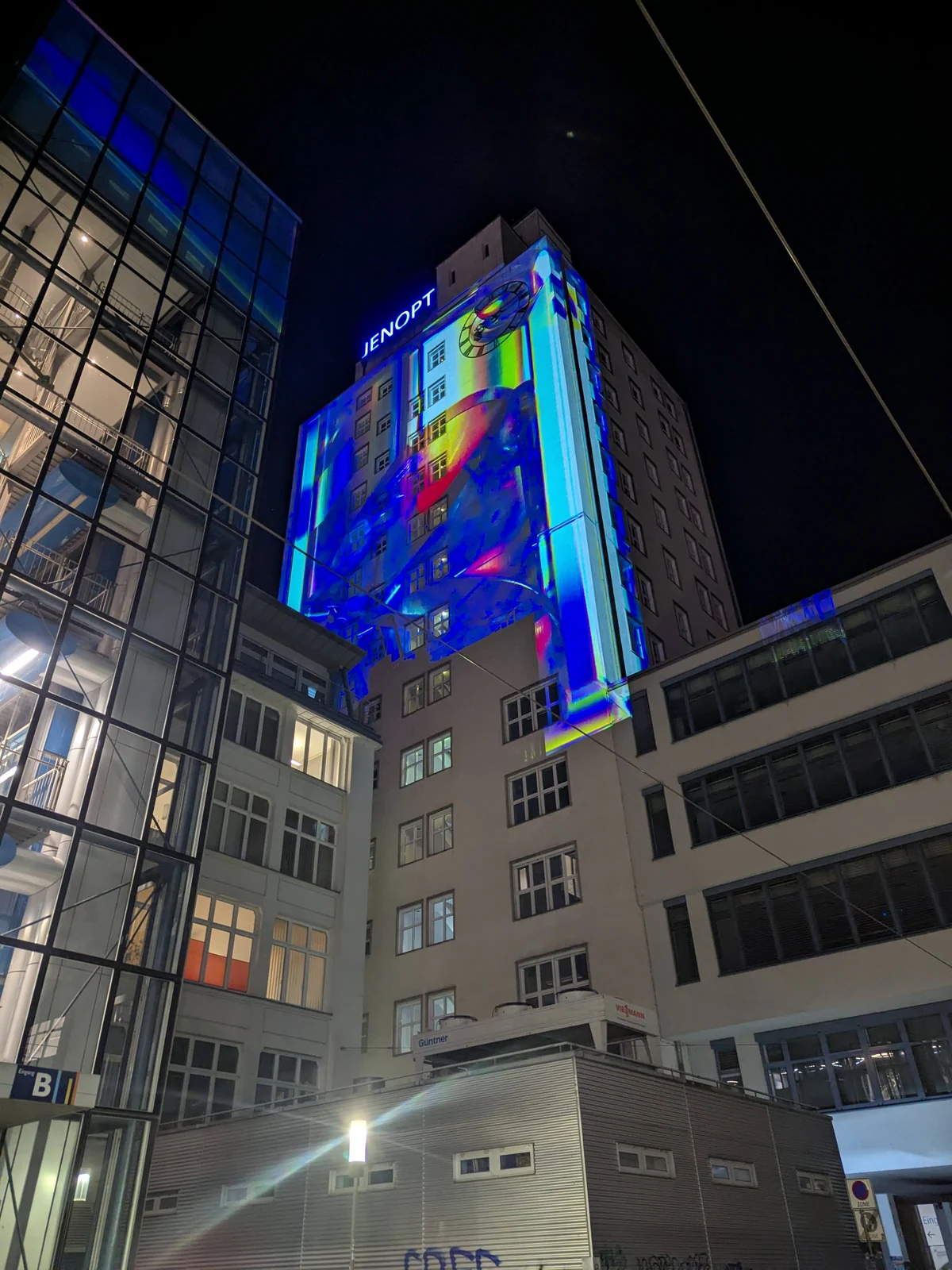
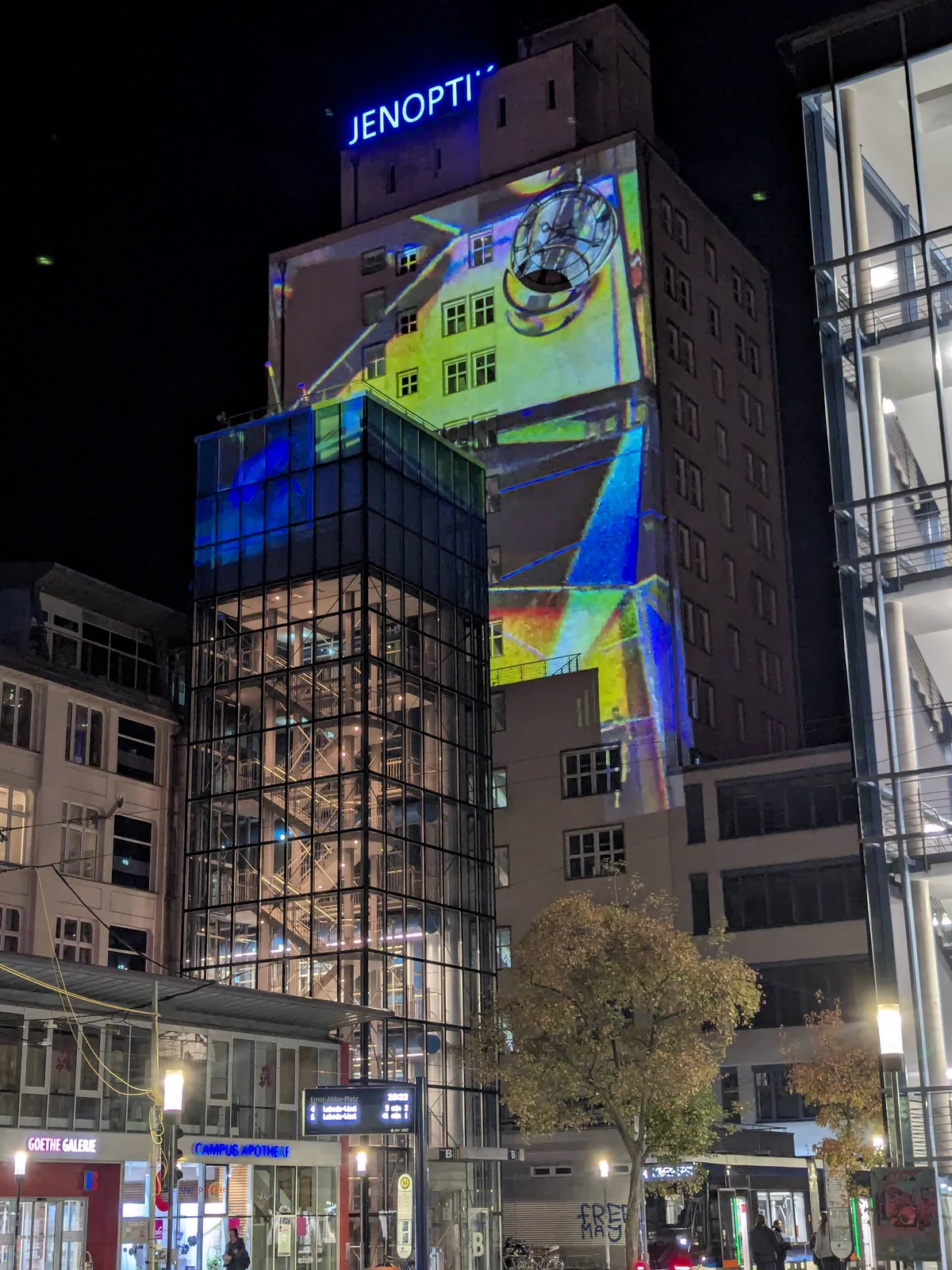
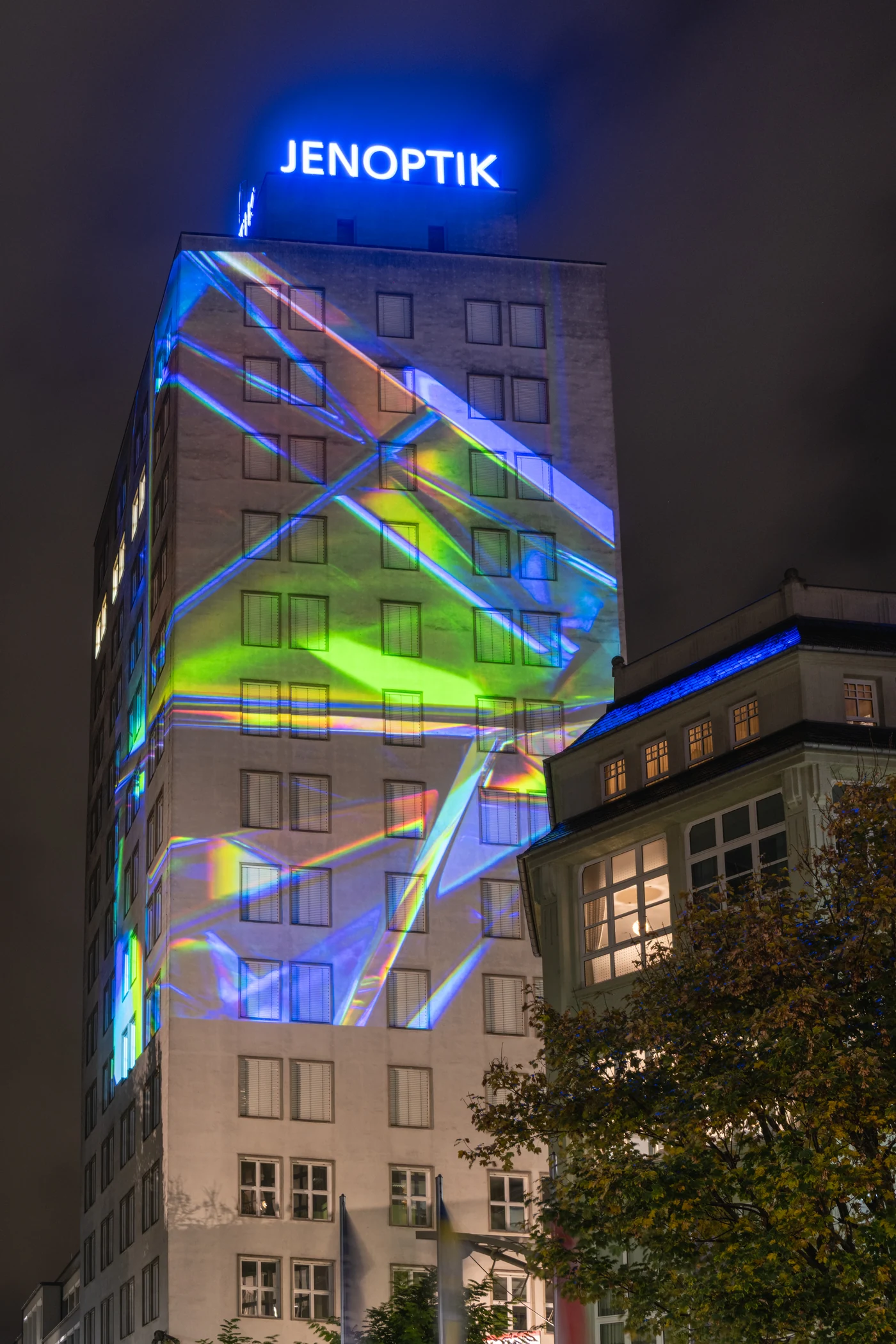
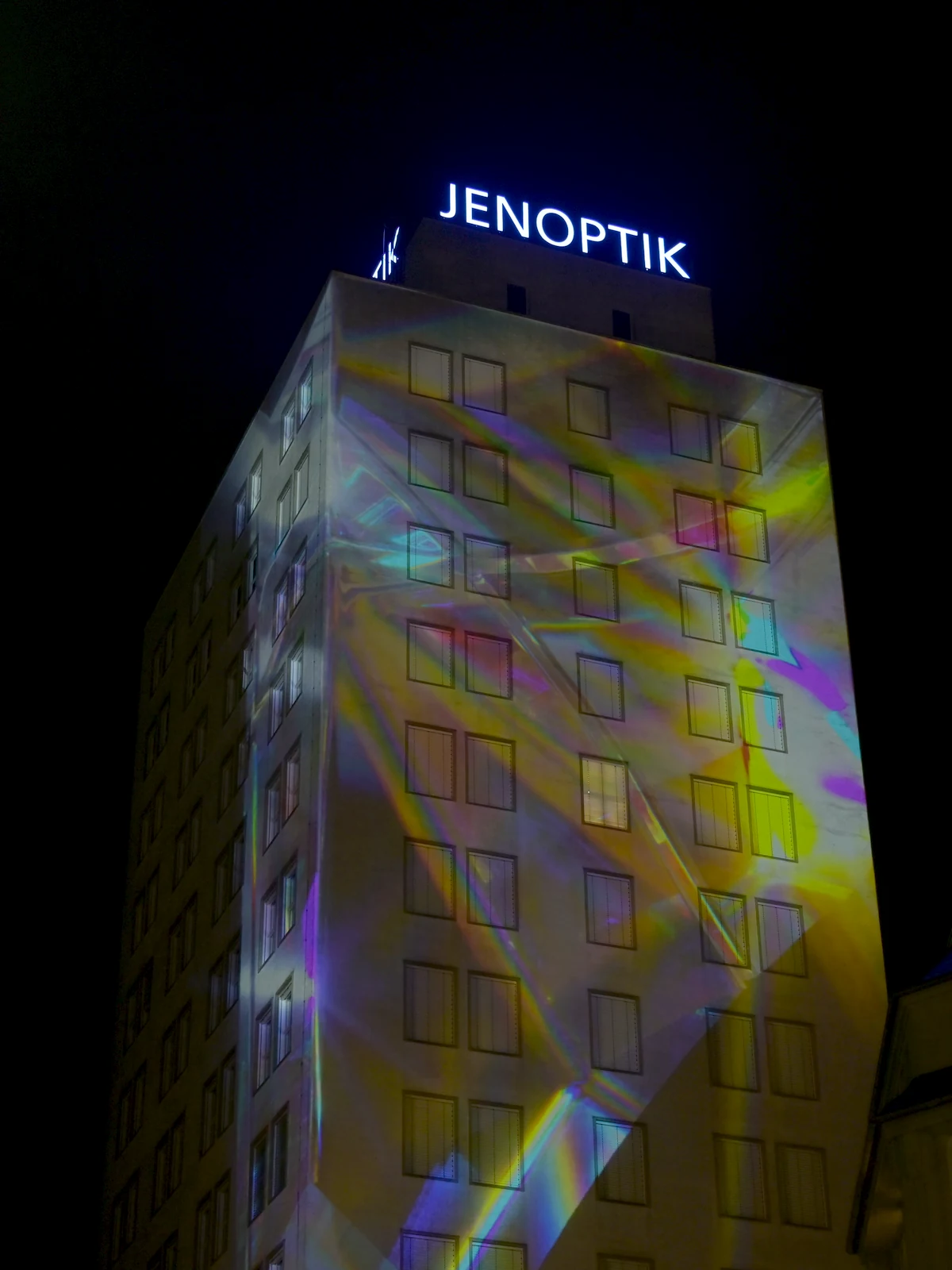
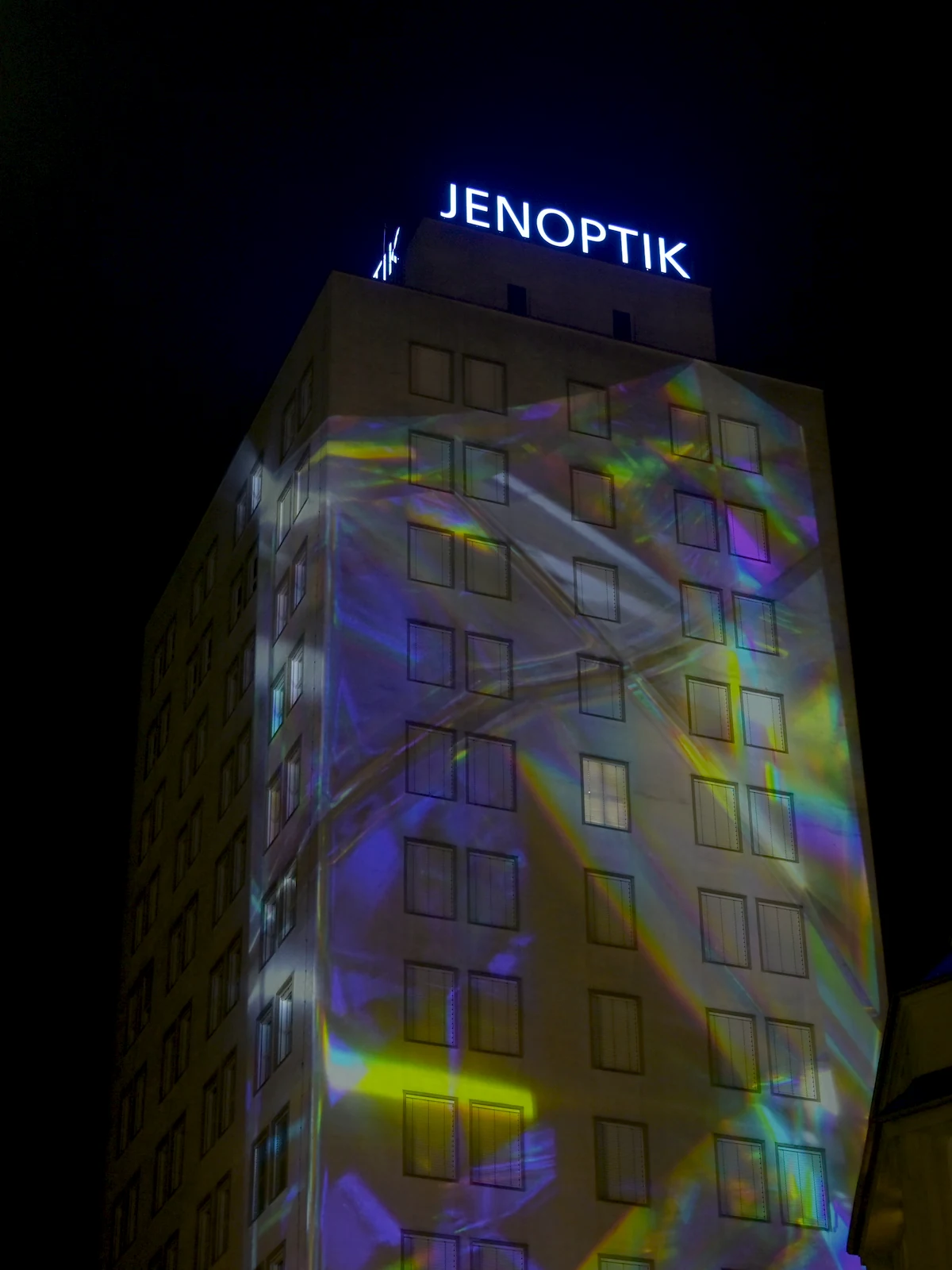
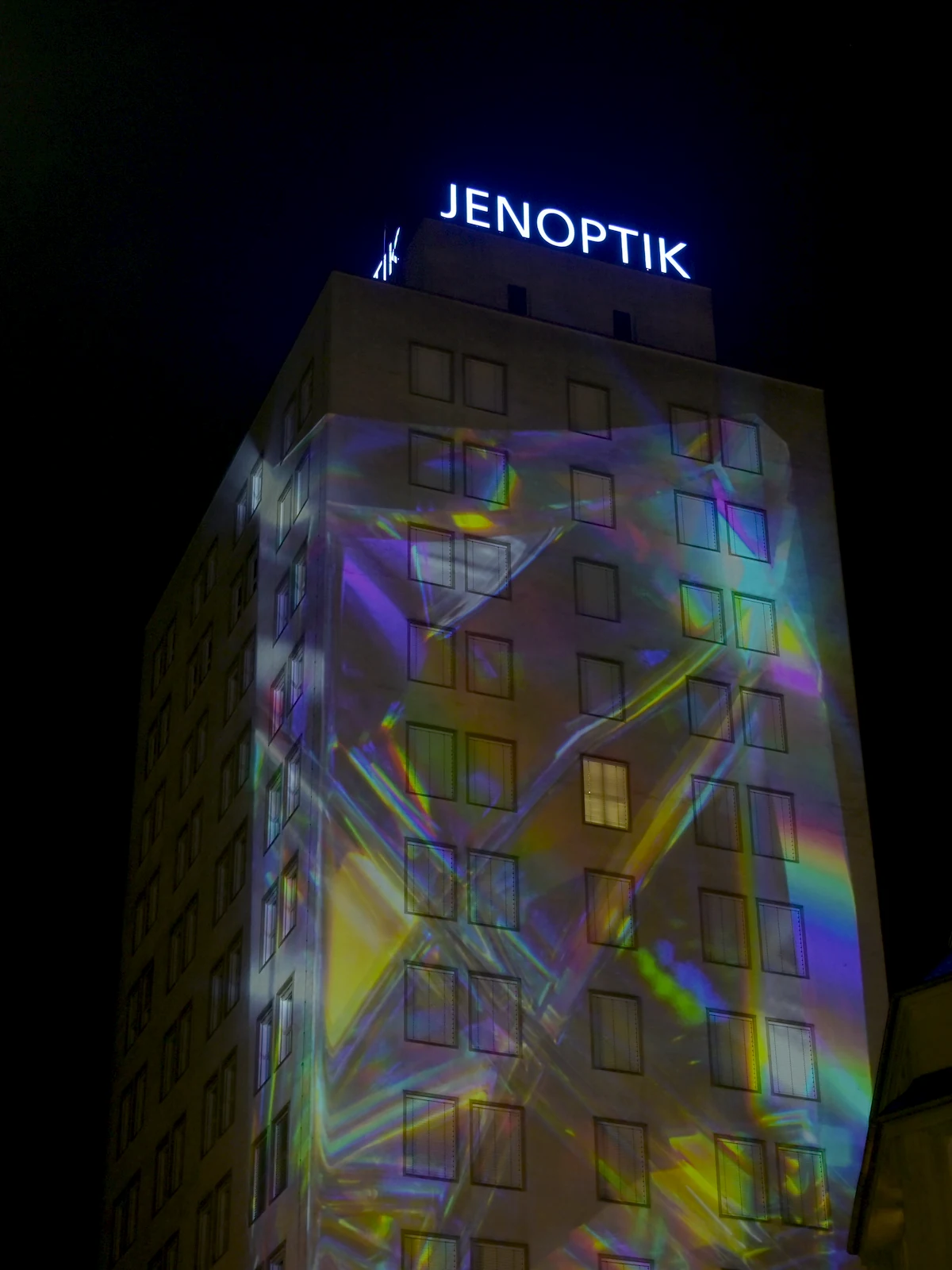
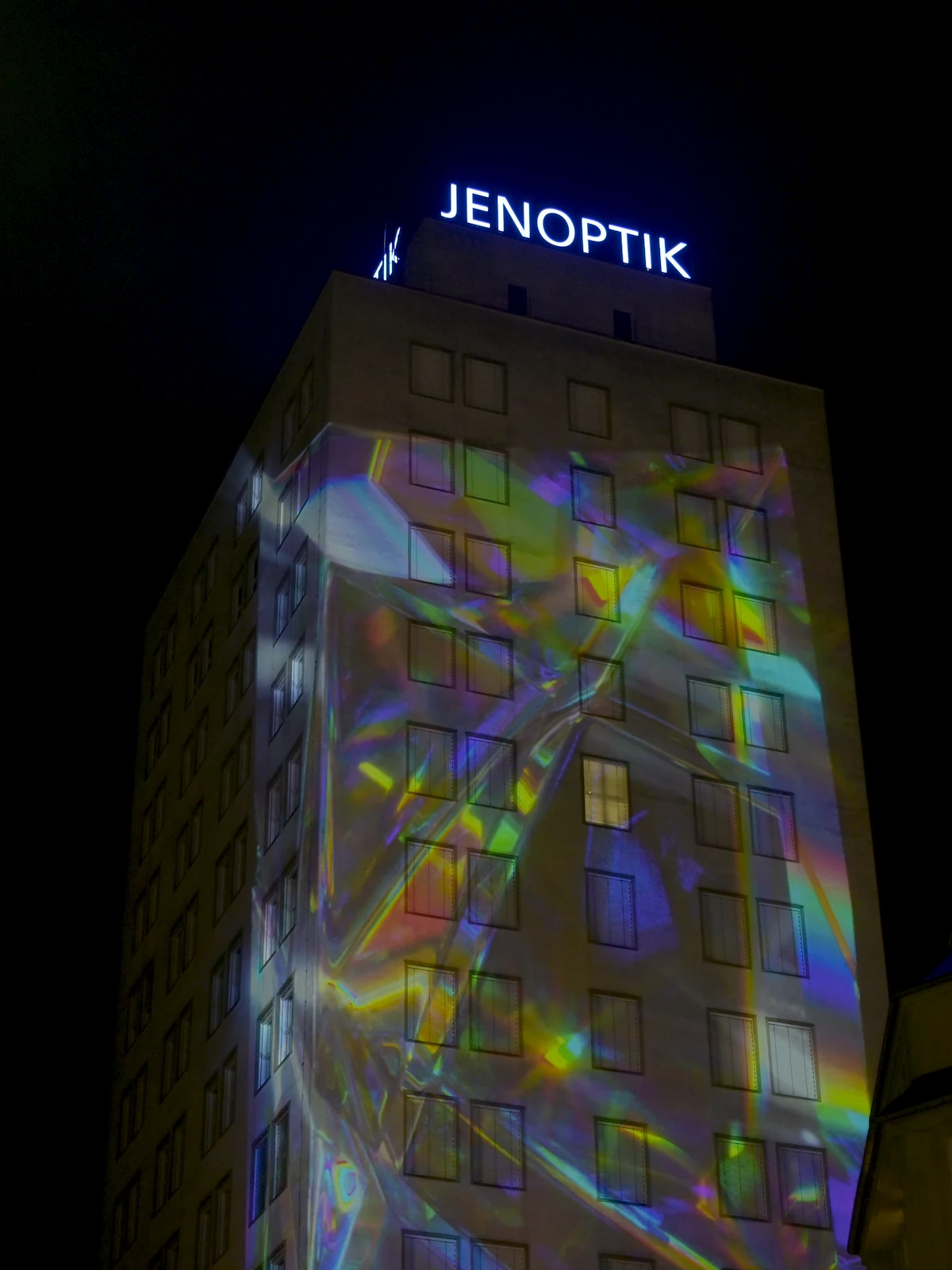
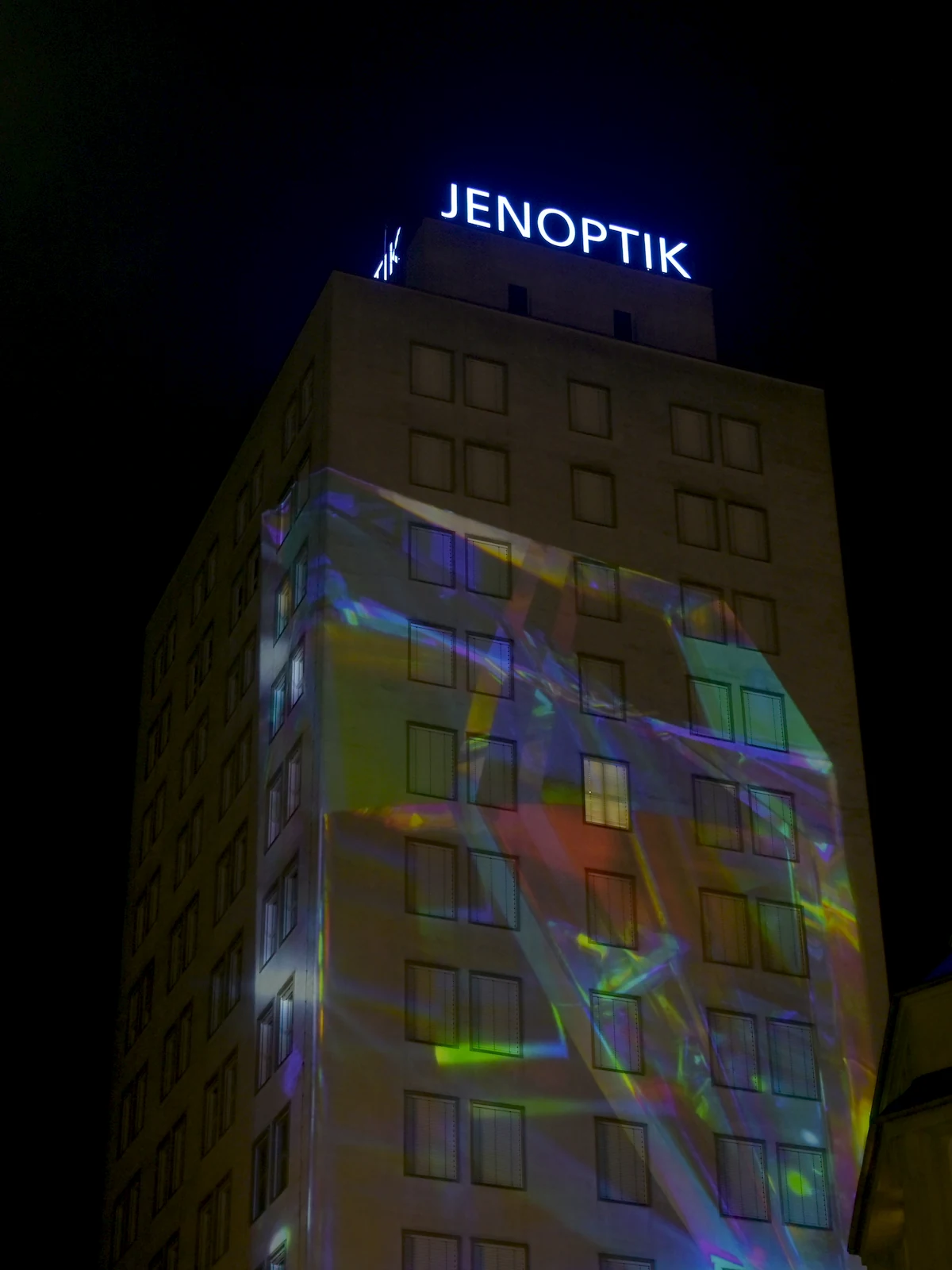
The installation The Abbe Number transforms the Ernst Abbe Tower (Building 36) into a fragmented lens-glass prism through the technique of Forced Perspective Projection Mapping. The building itself becomes a virtual optical medium that disperses incoming light into its spectral colours, a direct homage to Ernst Abbe's pioneering research on optical dispersion, quantitatively defined by the "Abbe number".
Dispersion describes the wavelength-dependent refraction of light. In optical instruments, it appears as colour fringes and halos (chromatic aberration), which are typically corrected with great technical effort. In The Abbe Number, these aberrations are not eliminated but elevated to the core of the aesthetic experience. Animated glass fragments create a kaleidoscopic interplay of colour and form, whose rhythmic modulation translates the complex physics of refraction into a poetic visual language. The simulation of the two projector beams, positioned at Volkshaus and Carl-Zeiß-Platz, is integrated directly into the work as a component of its technical and artistic reality.
The piece materializes scientific precision as an aesthetic experience: the Abbe number becomes the generator of a visual composition in light, colour, and architecture. In doing so, the tower is transformed from a functional structure into a monumental prism of dispersion, a larger-than-life tribute to the unity of science and art.
The first of the Murano HUD works. The next one put Venetian glass on Denver's Daniels & Fisher Tower: Murano//HUD:$ync.DF, 2026.
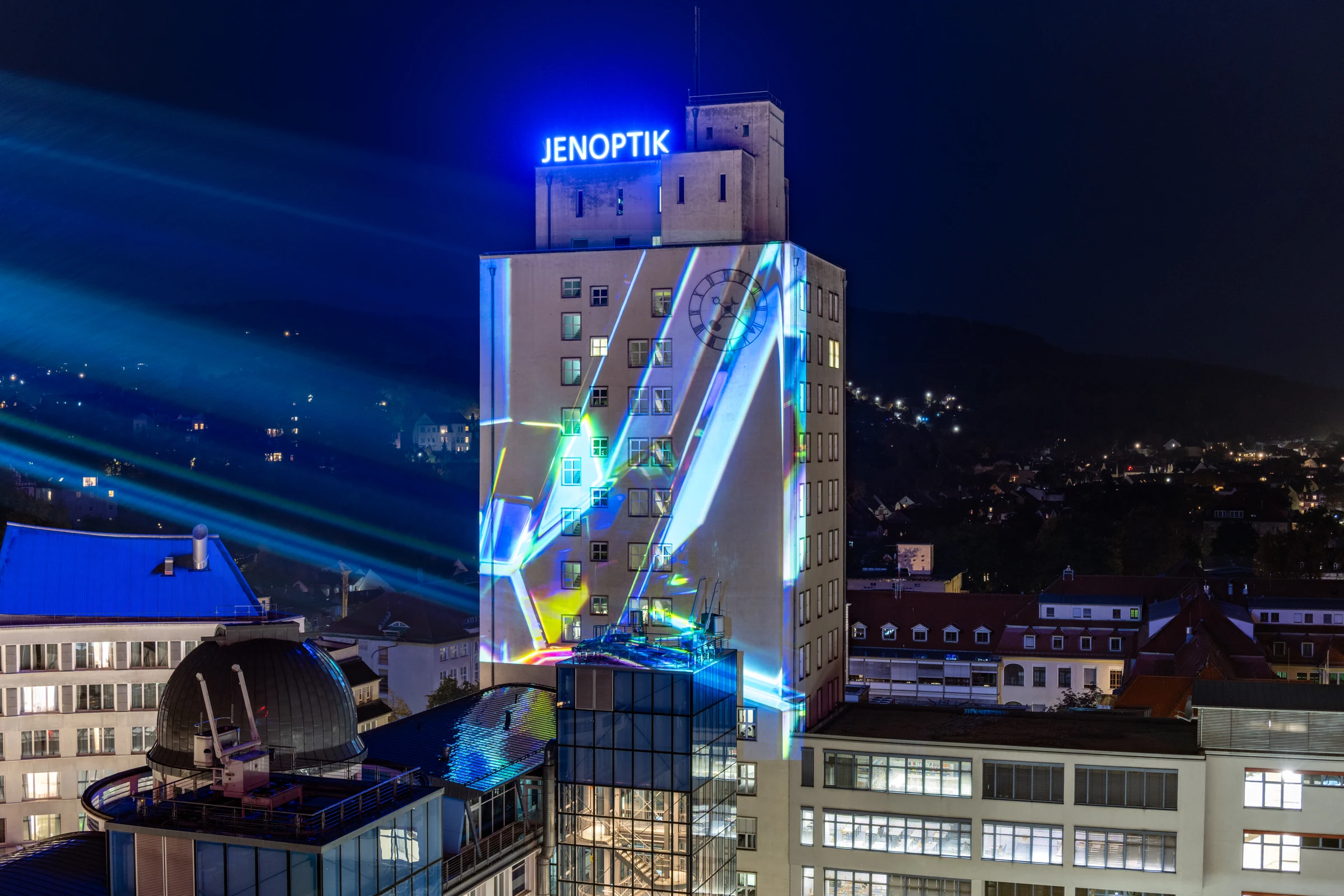
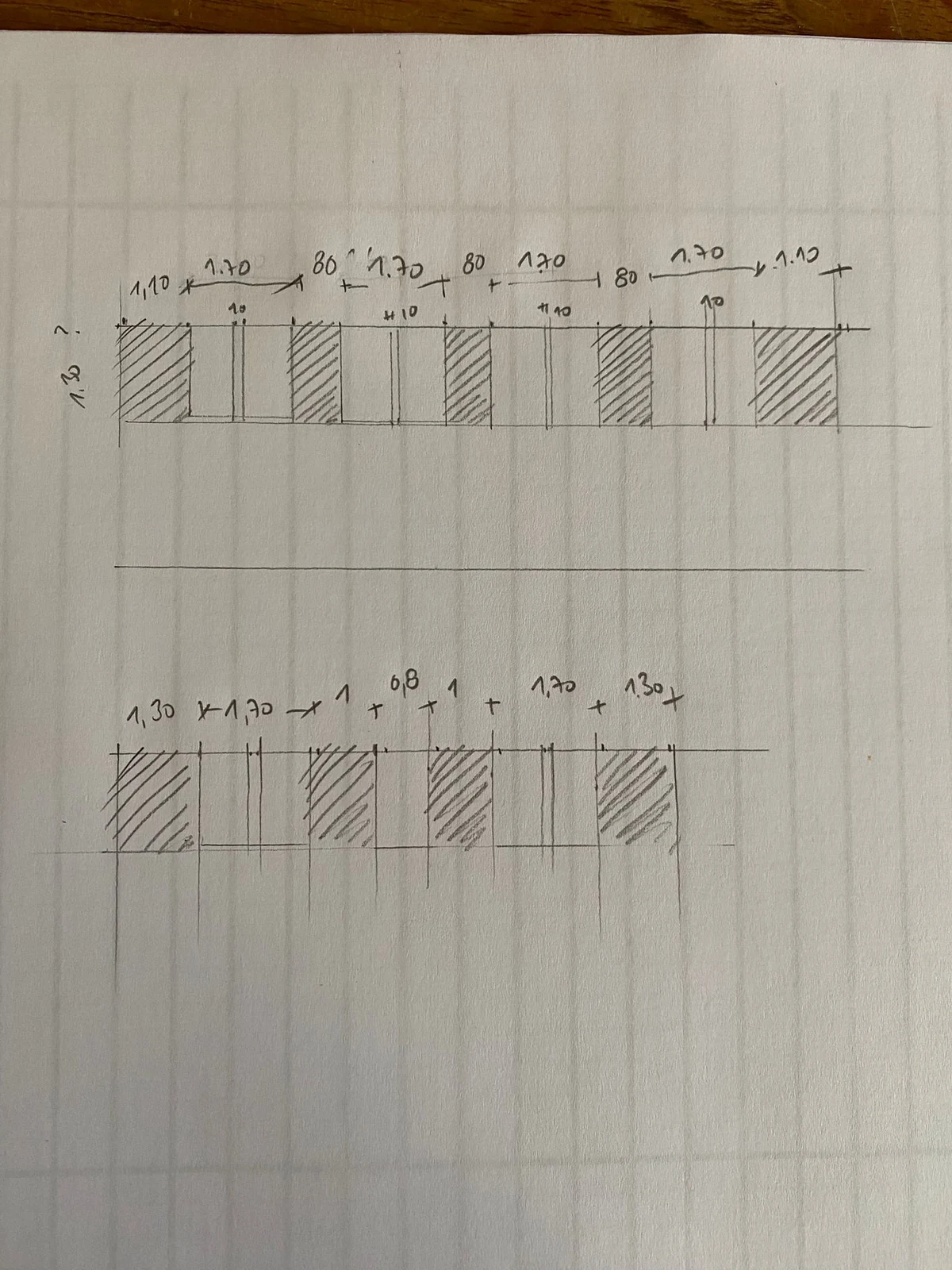
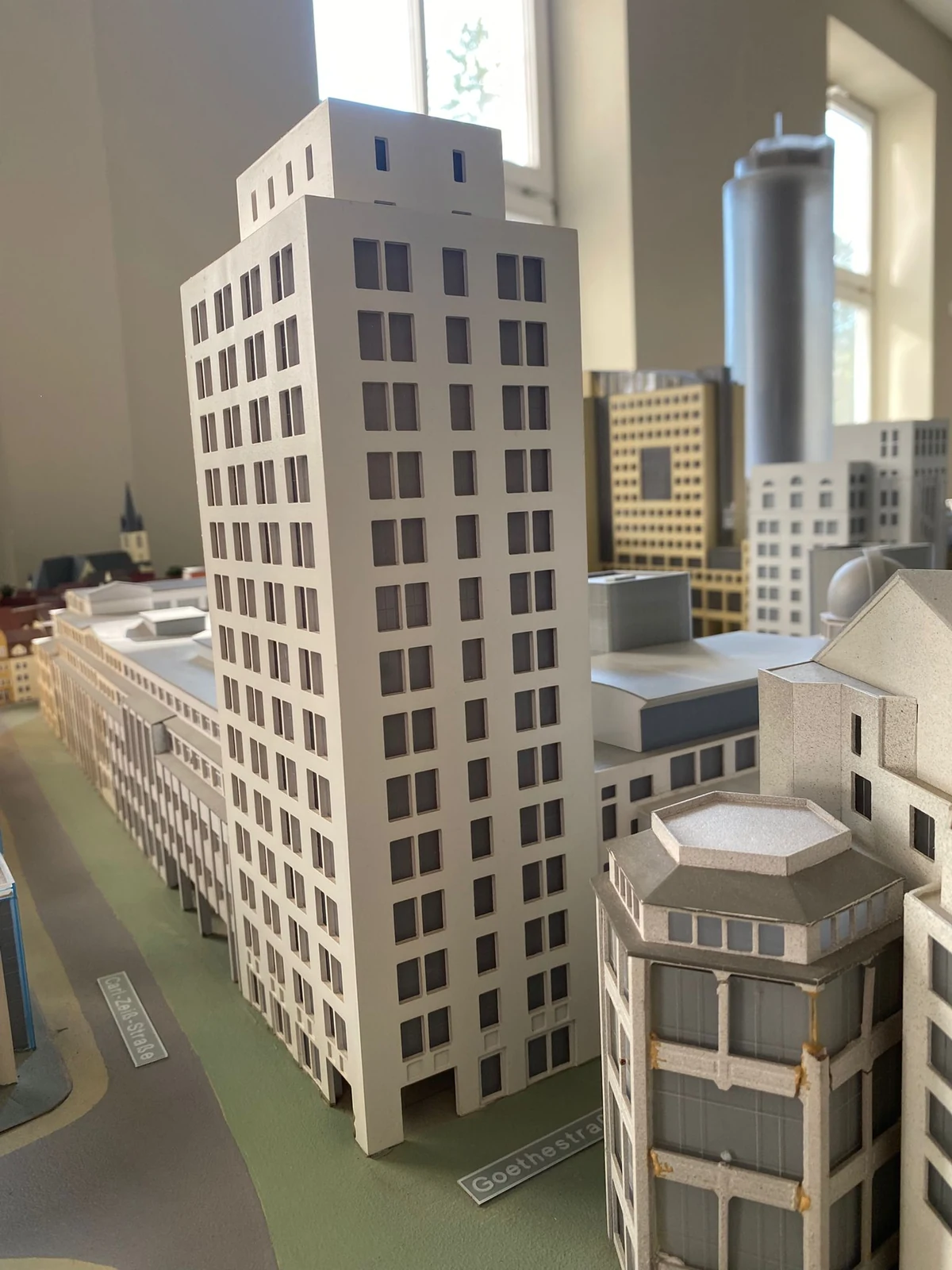
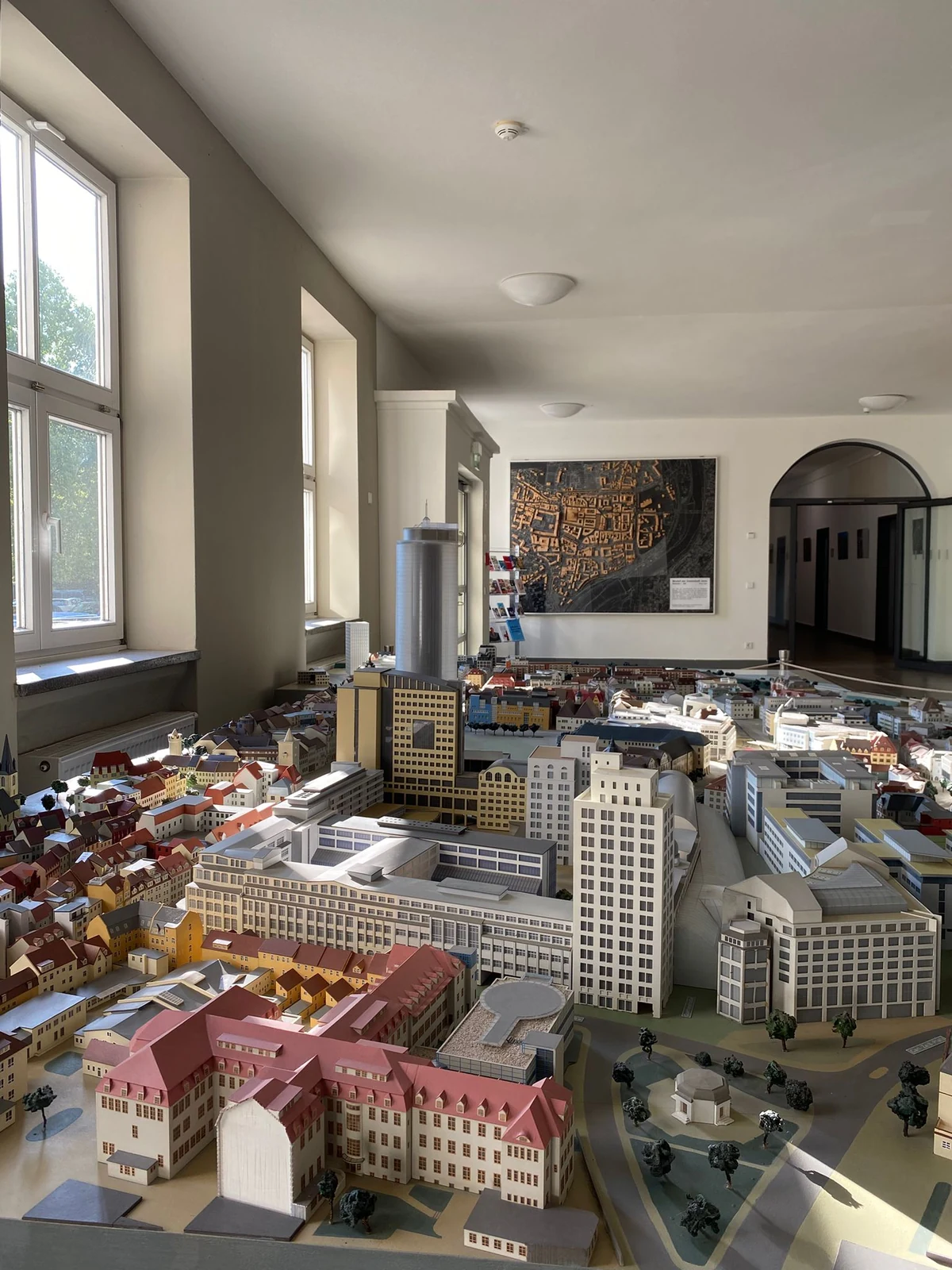
Before the light: the facade measured by hand, the tower in Jena's city model, a test night on site on 30 September 2025.